The recommended route
Cambridge preparation fails in a predictable way: months of general English, then a panicked fortnight of past papers. The fix is not more hours — it is a better order. Four steps, each one building on what the last one told you.
Last reviewed
Prepare in this order: (1) sit one full mock exam cold, under the real timing, to confirm the level and find your weakest paper; (2) train that weakest paper part by part, reading the explanation behind every wrong answer; (3) have your writing and speaking marked on the four Cambridge scales from the first week, because those are the two papers you cannot check yourself; (4) finish with two or three full mocks on the real clock in the final fortnight. Cambridge estimates roughly 500–600 guided hours behind a B2 pass and 700–800 behind C1, counted from beginner.
New to the exam itself? Start with the complete guide to B2 First — format, scoring and all four papers explained.

Step 1
Not after a revision week: now, cold. A full paper under the real timing tells you two things no course can — whether this level is the right one to book, and which paper costs you the most marks. That paper is your syllabus; everything after this step is built on knowing it.
Step 2
Every part of a Cambridge paper is its own small skill: an open cloze rewards different thinking than a gapped text. Drill one part at a time, read the explanation behind every answer you get wrong, and move to the next part only when the current one stops costing marks. Precision beats volume — 'I'm bad at English' becomes 'I lose marks on key word transformations', which is a solvable problem.
Step 3
These are the two papers self-study cannot check — you can mark your own cloze, but not your own essay. Send writing and speaking in from the start, not as a final dress rehearsal: the four Cambridge scales reward specific habits, and habits need weeks to change, not days. Speak your answers out loud where you can; type them when you cannot.
Step 4
In the last two weeks, put the parts back together: two or three complete papers at full length, under the real timing, no pauses. This is where stamina and time management get trained — and where exam day quietly turns into a repeat of something you have already survived. The final two days are for sleep and logistics, not new material.
Real screens, straight from the site — every paper at both levels. Each one opens the part of the bank it came from.
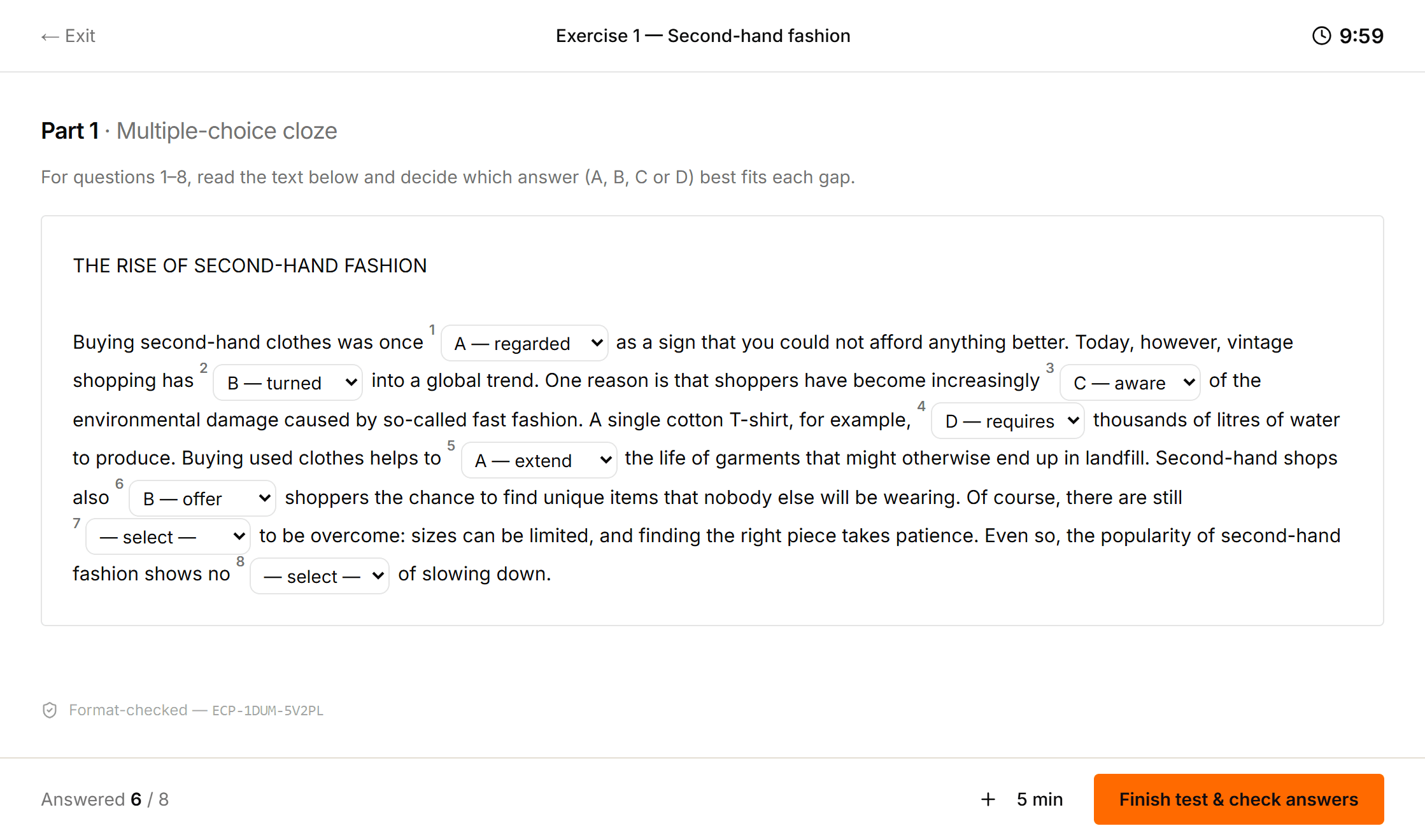 B2 · Reading & UoE, Part 1
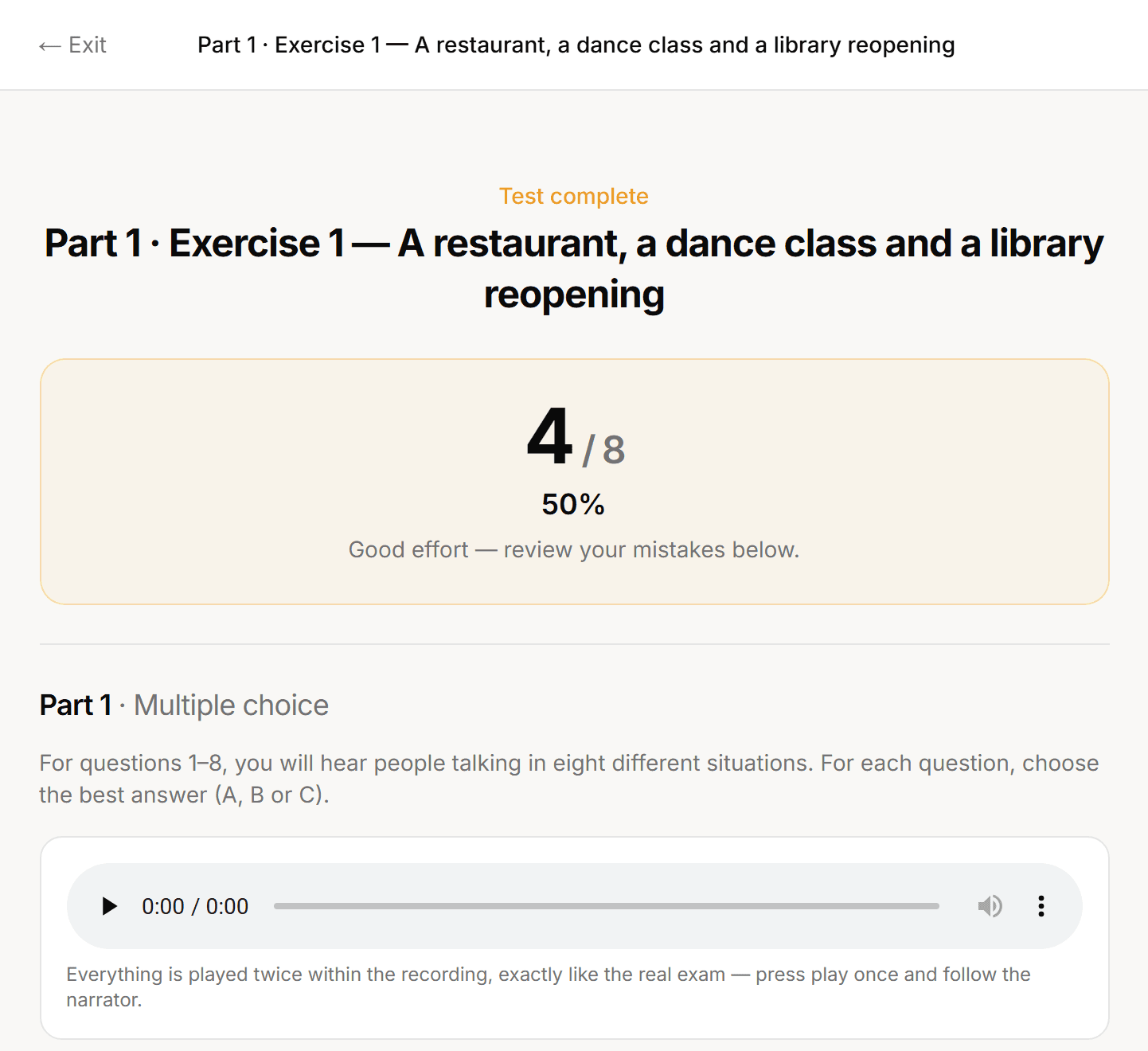 B2 · Listening, Part 1
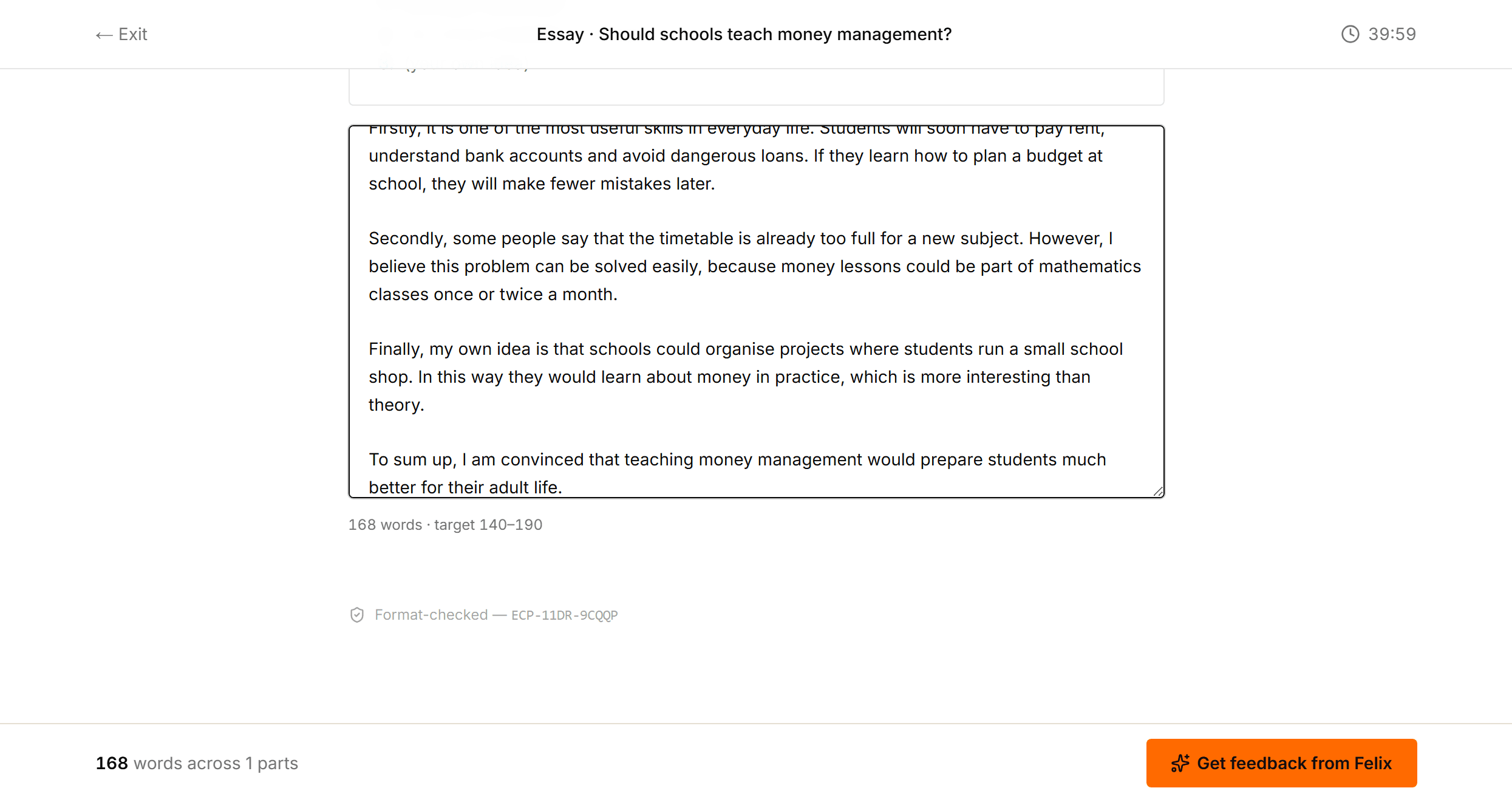 B2 · Writing: essay
 B2 · Speaking, Part 2
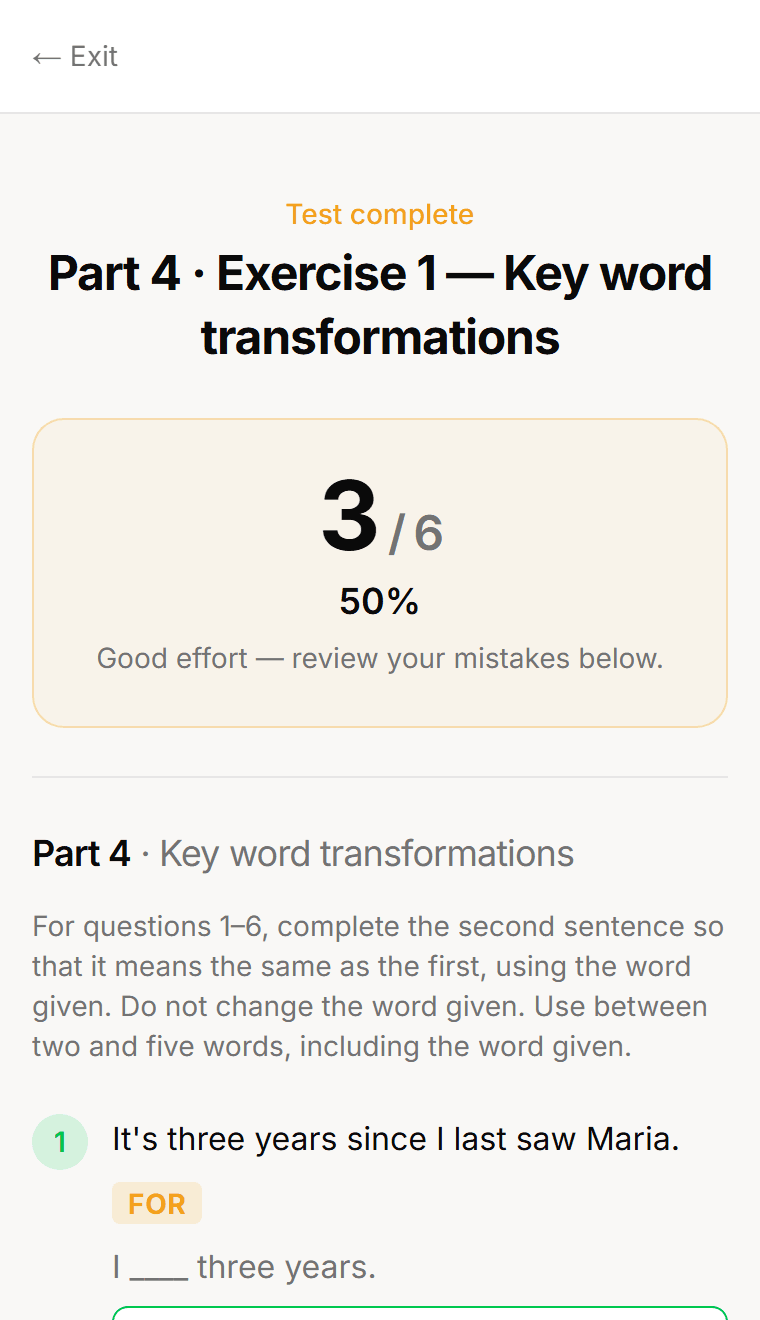 B2 · Key word transformations
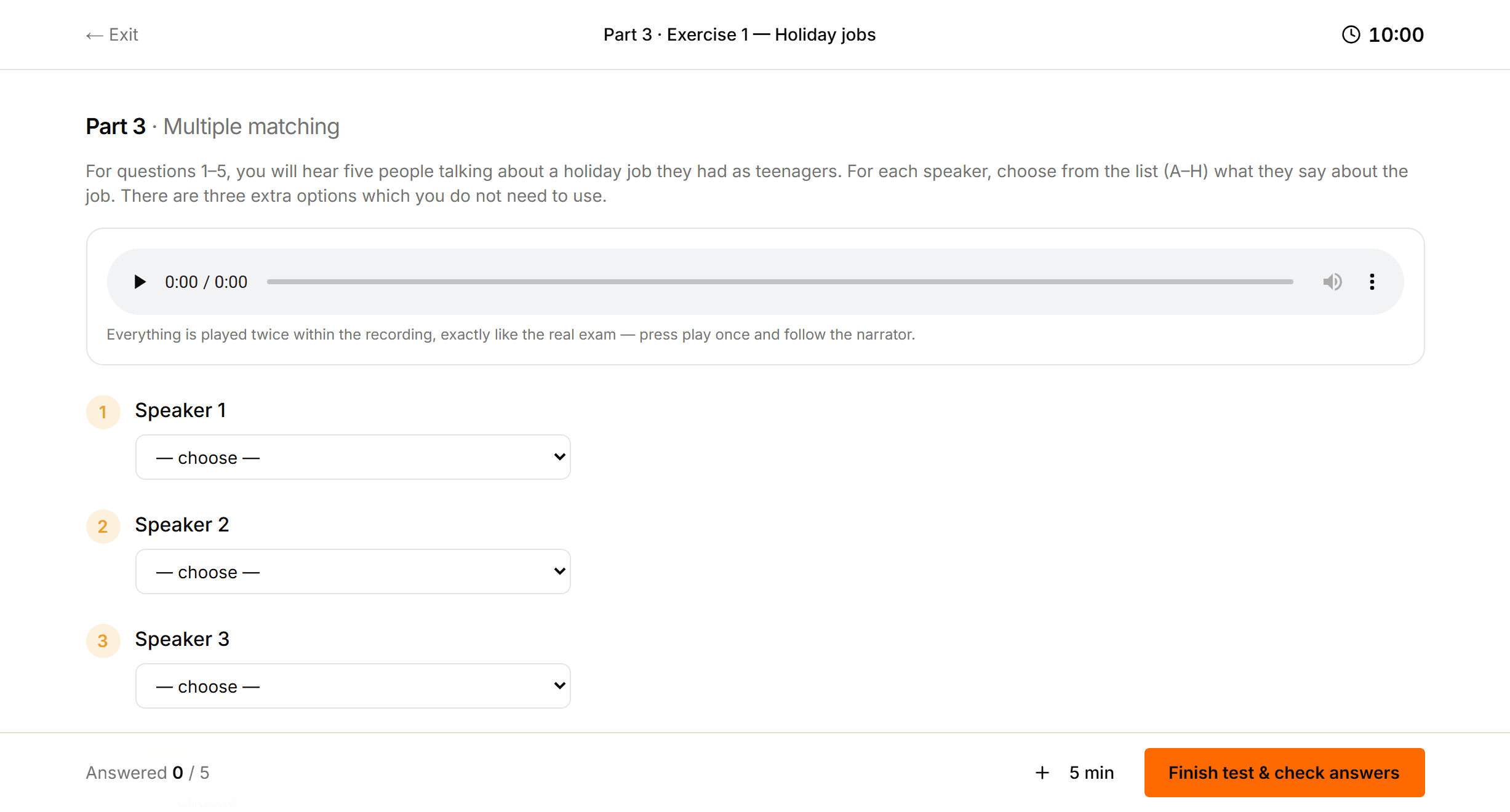 B2 · Listening, Part 3
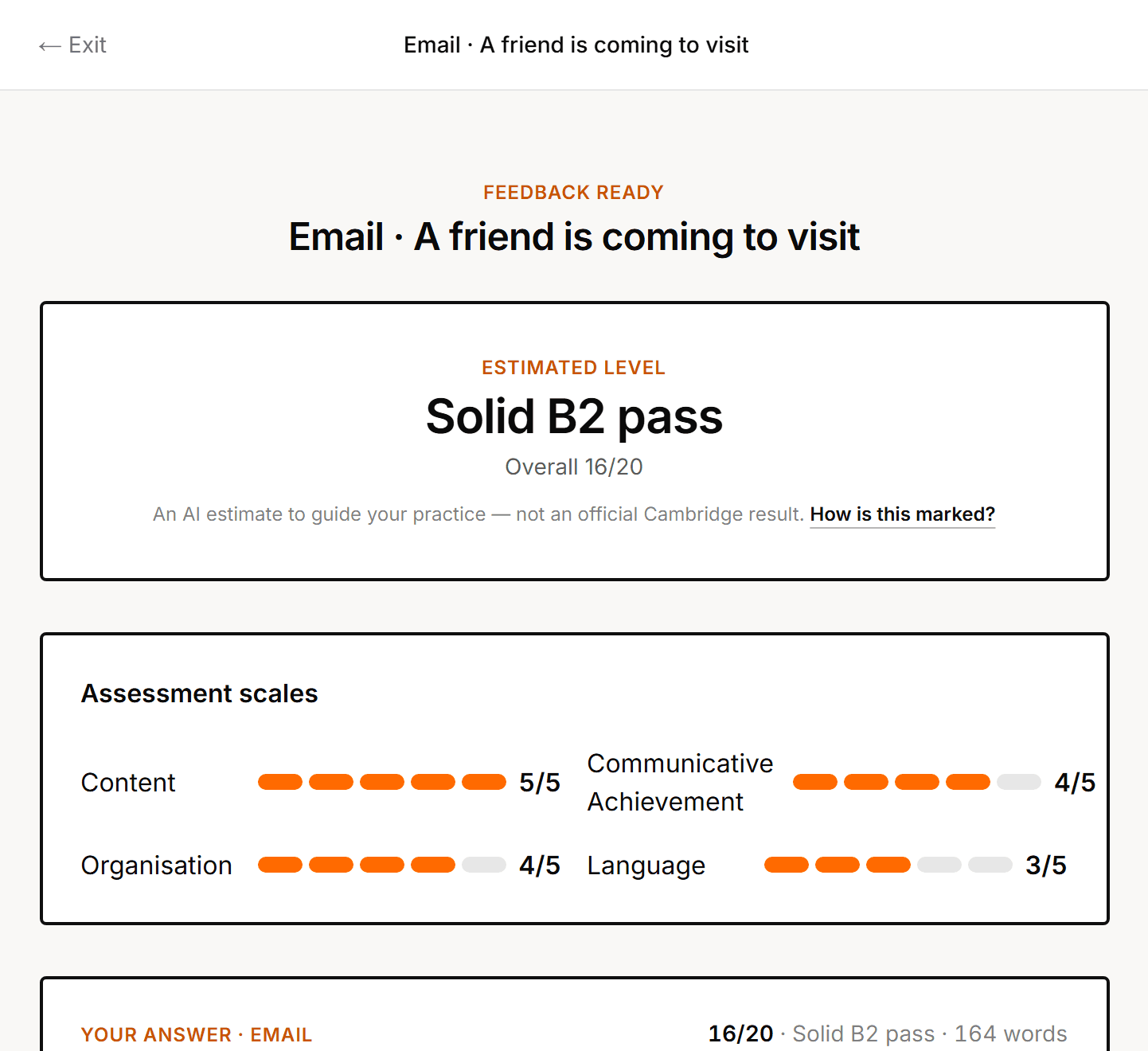 B2 · Writing: email & letter
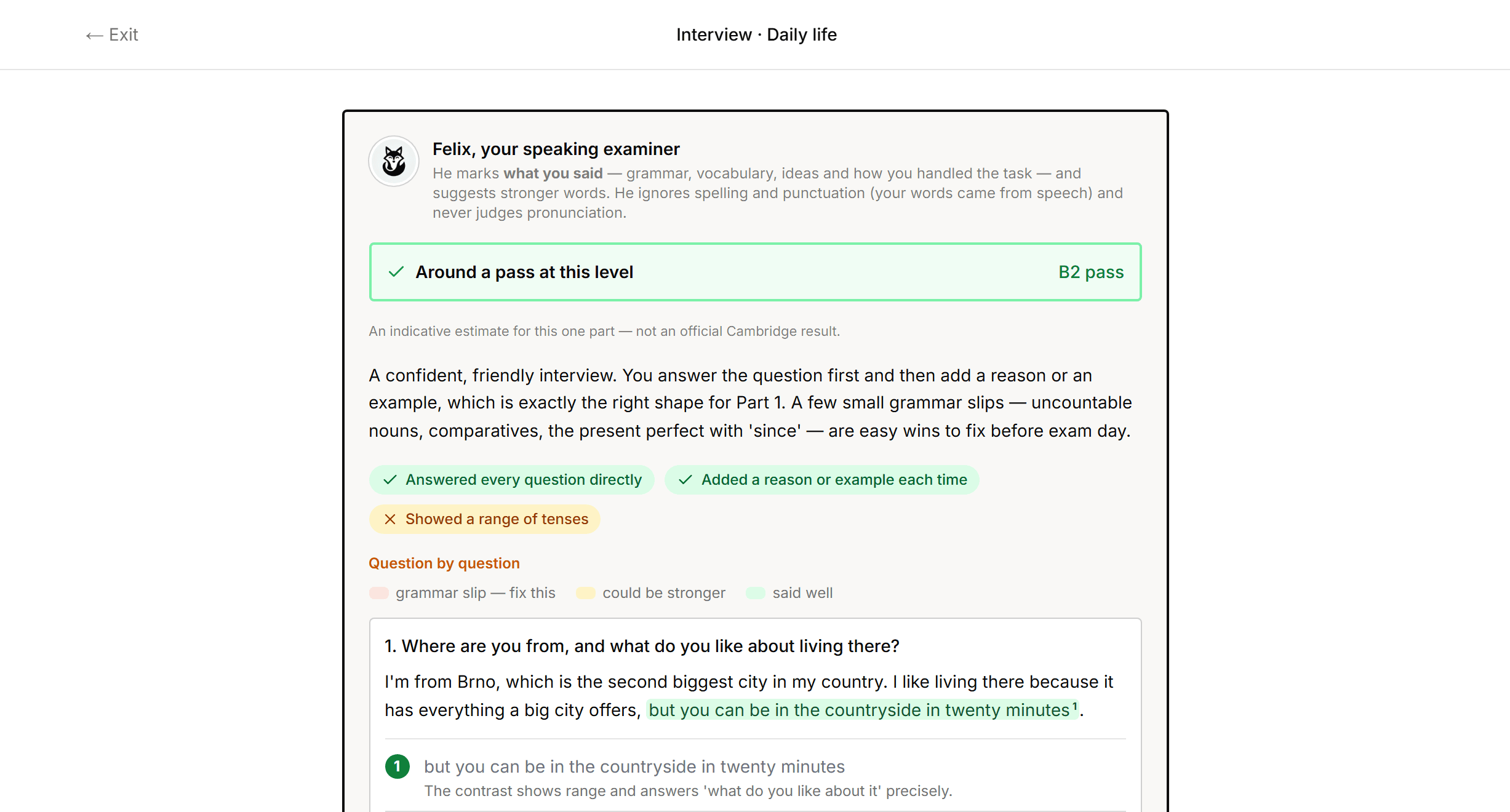 B2 · Speaking, Part 1
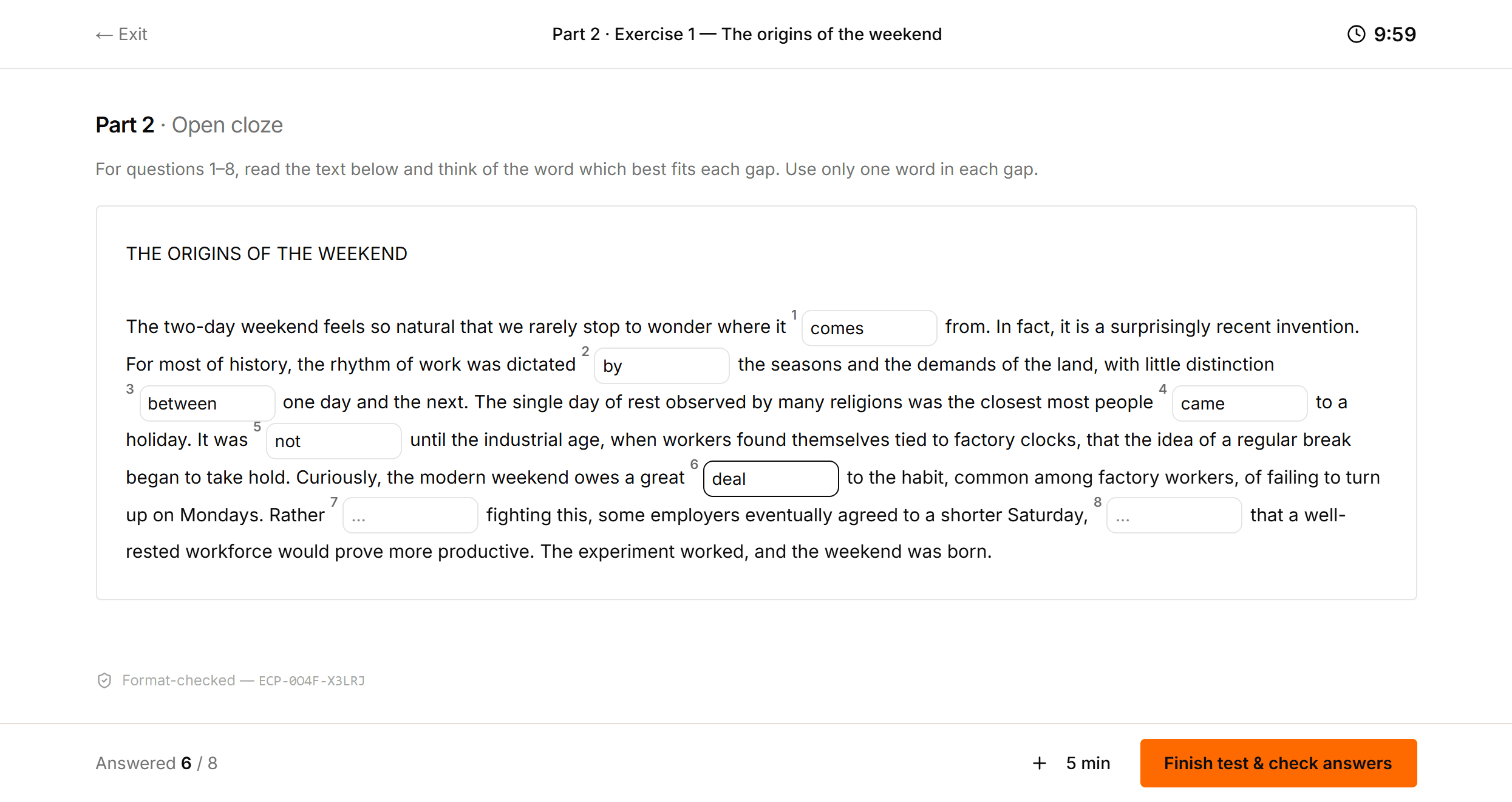 C1 · Open cloze
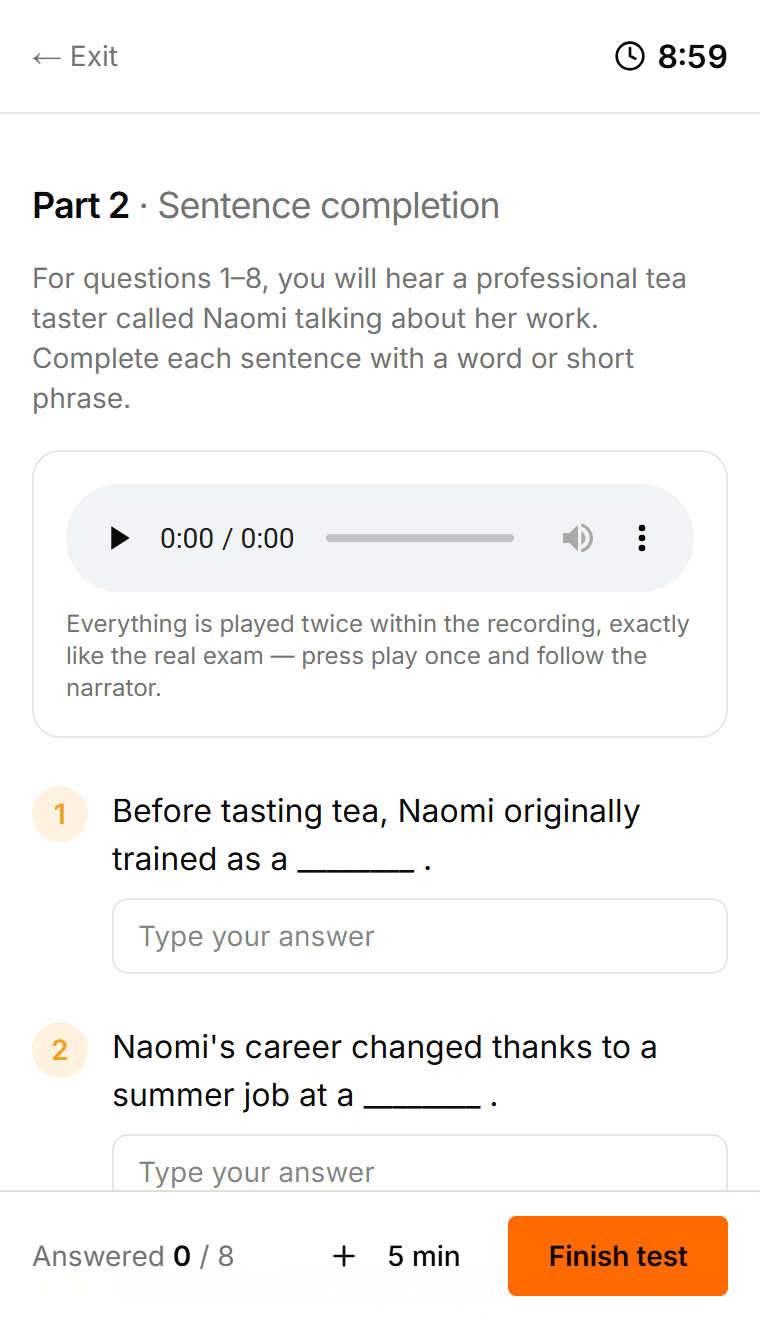 C1 · Listening, Part 2
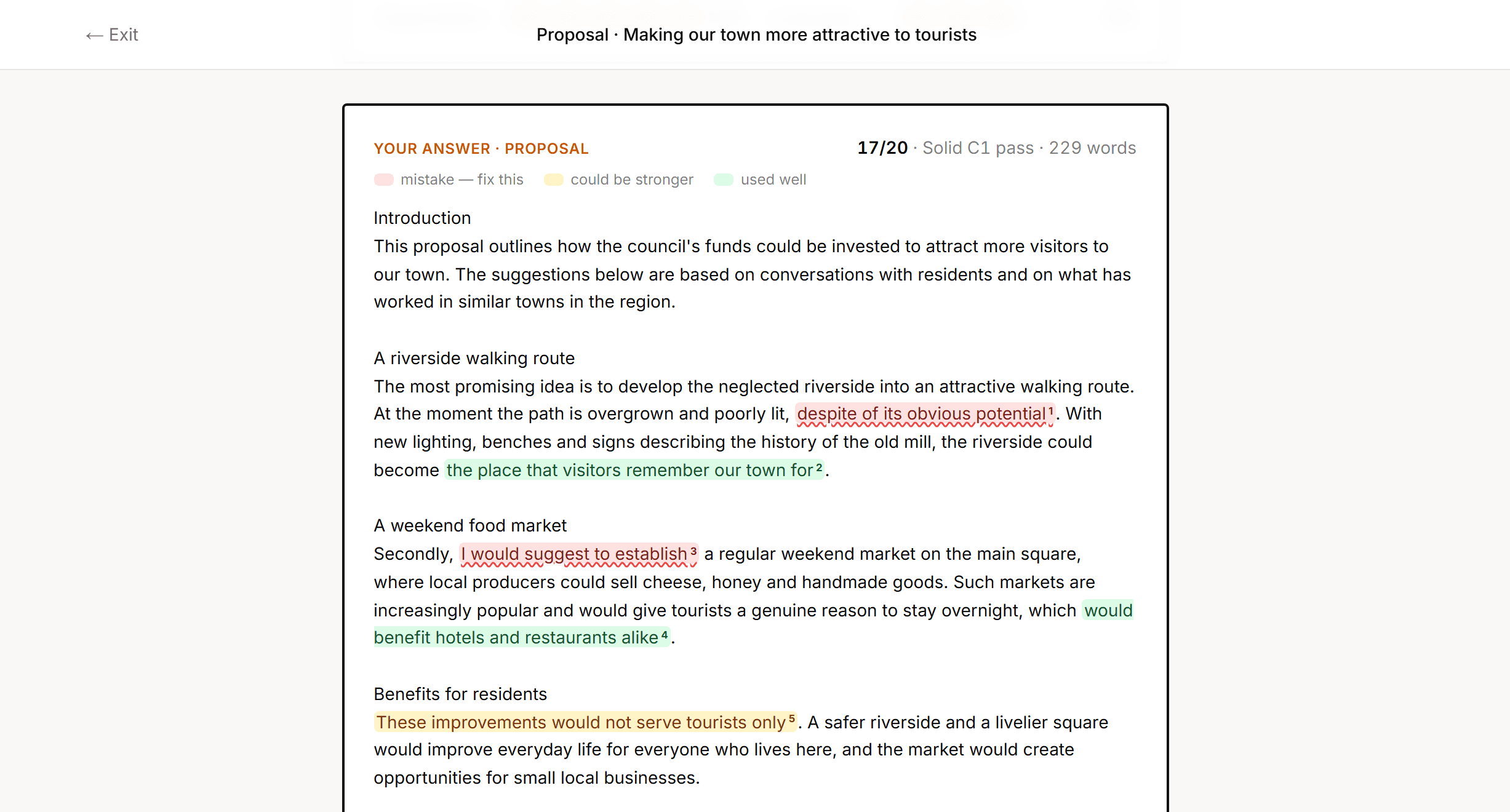 C1 · Writing: proposal
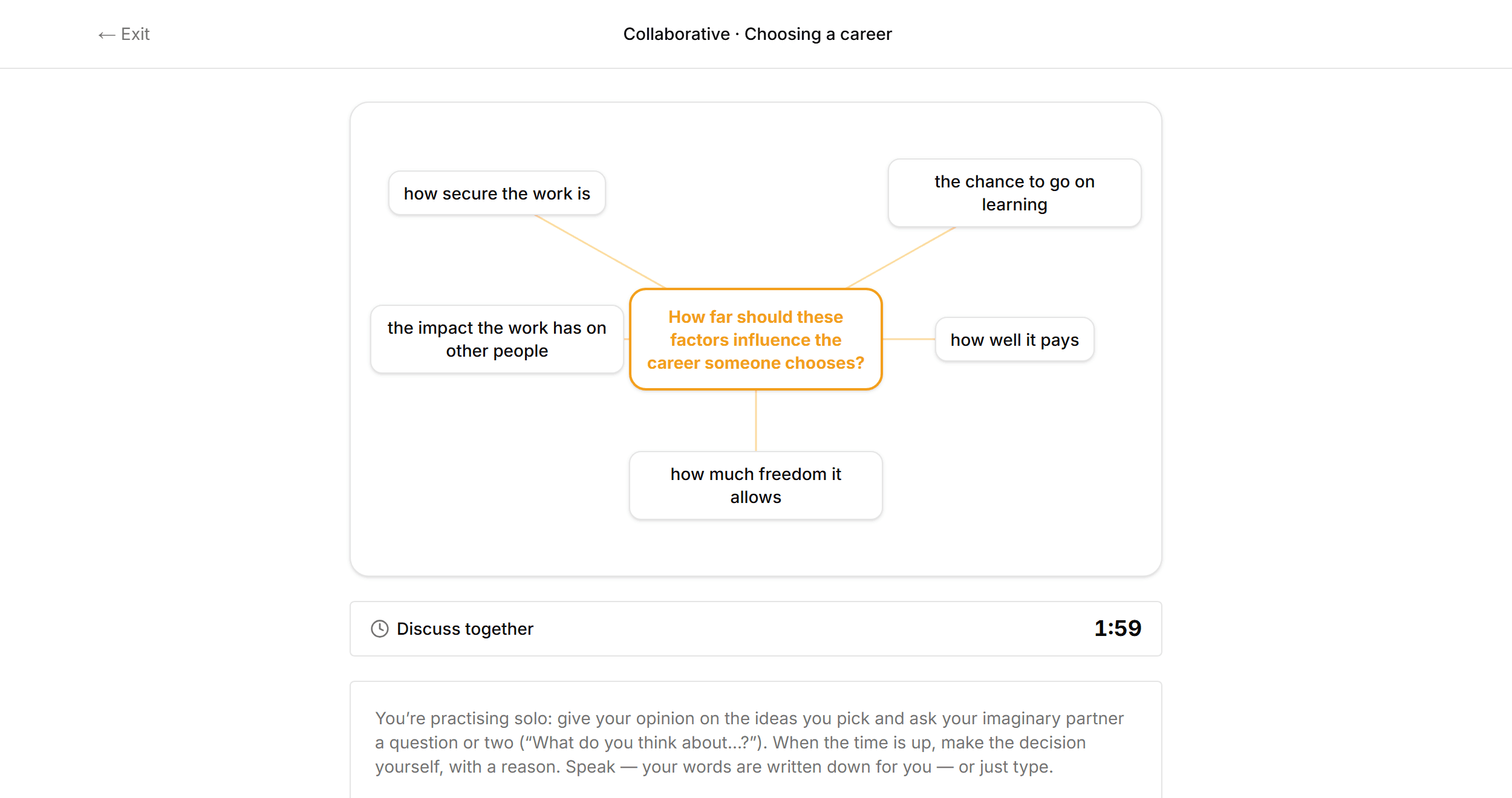 C1 · Speaking, Part 3
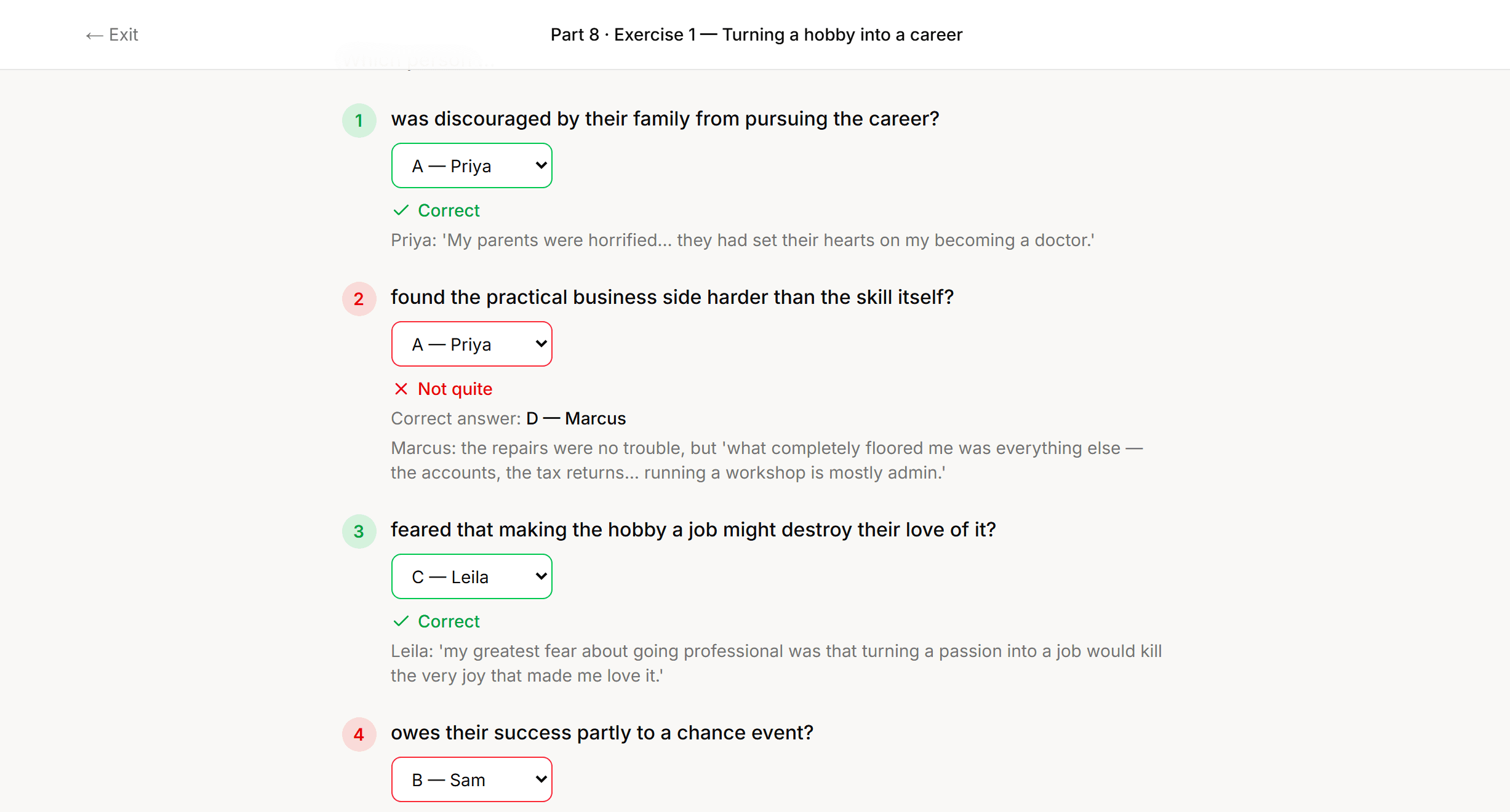 C1 · Reading & UoE, Part 8
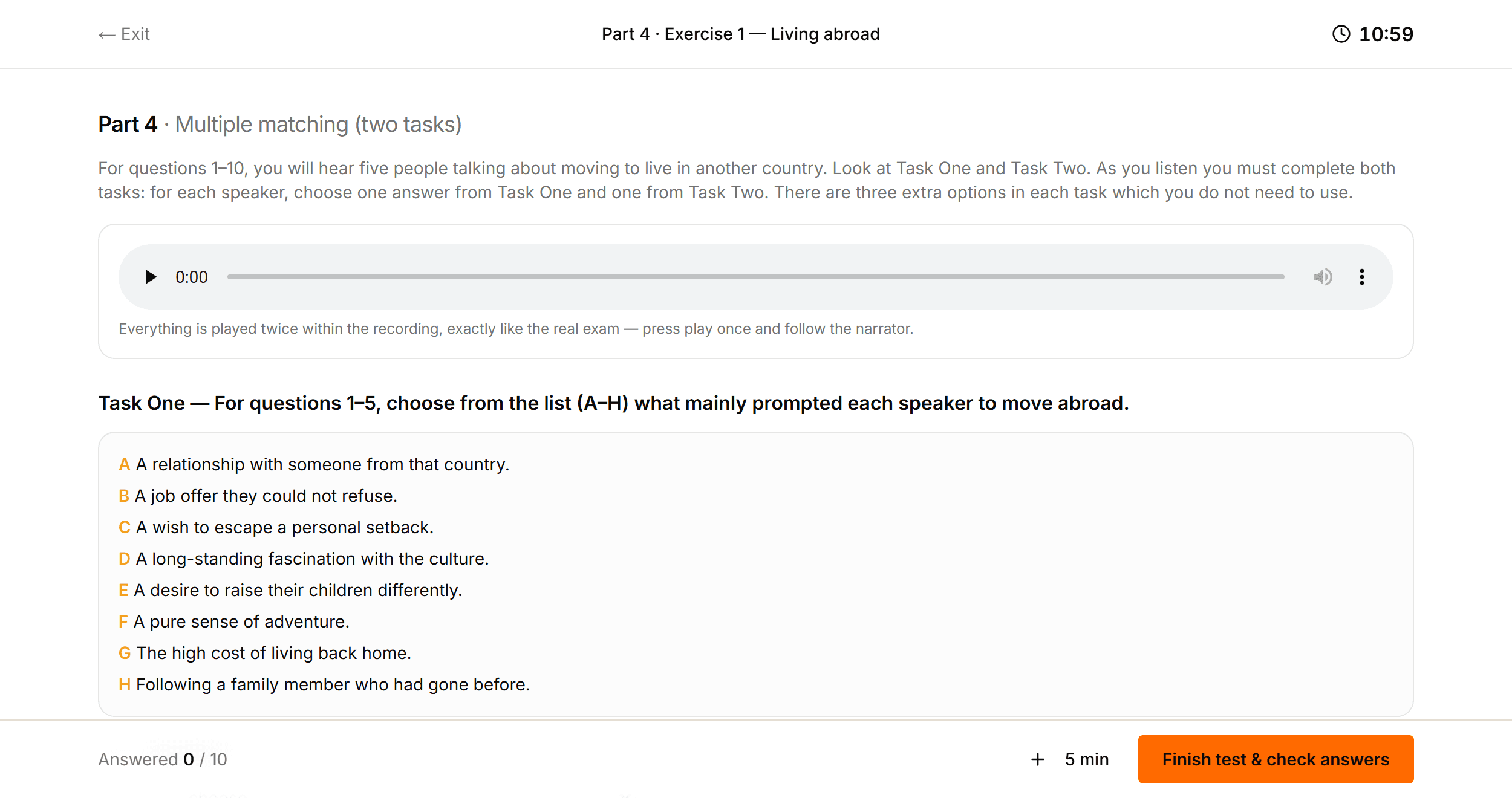 C1 · Listening, Part 4
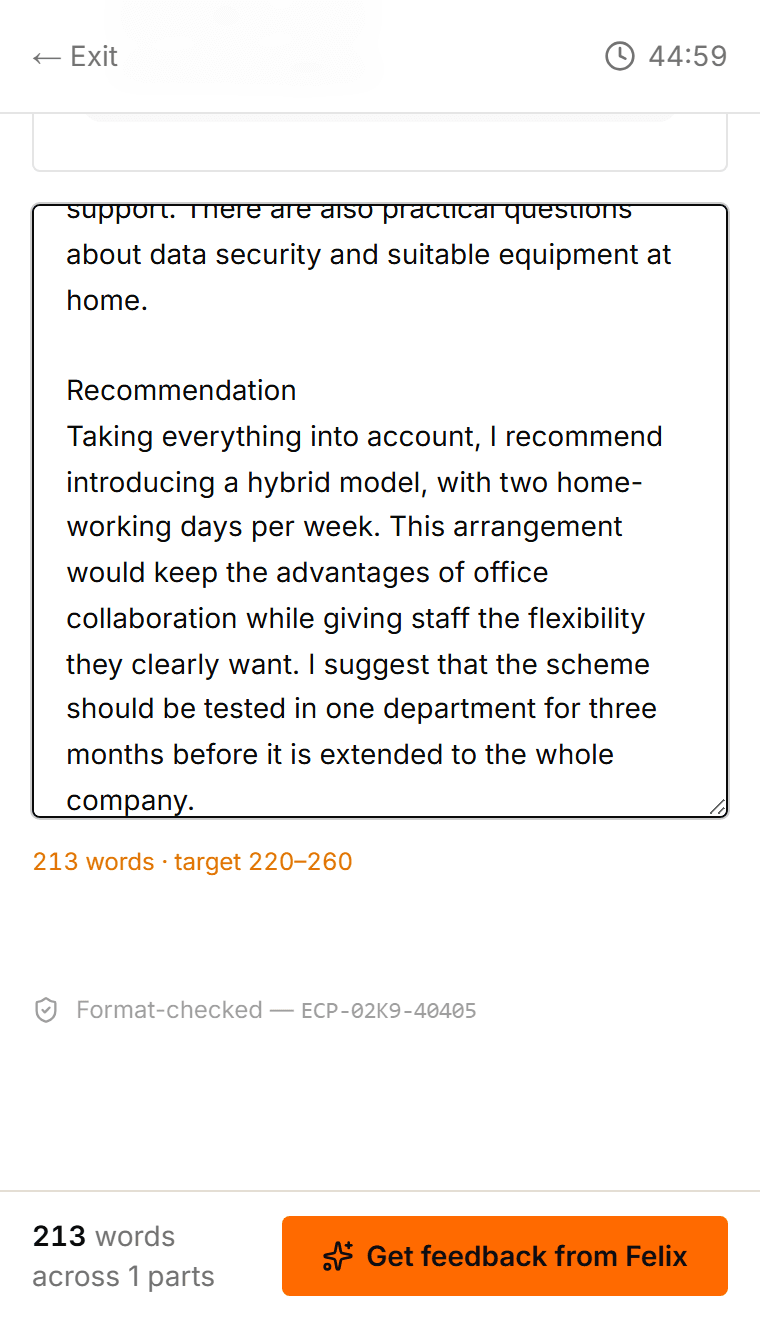 C1 · Writing: report
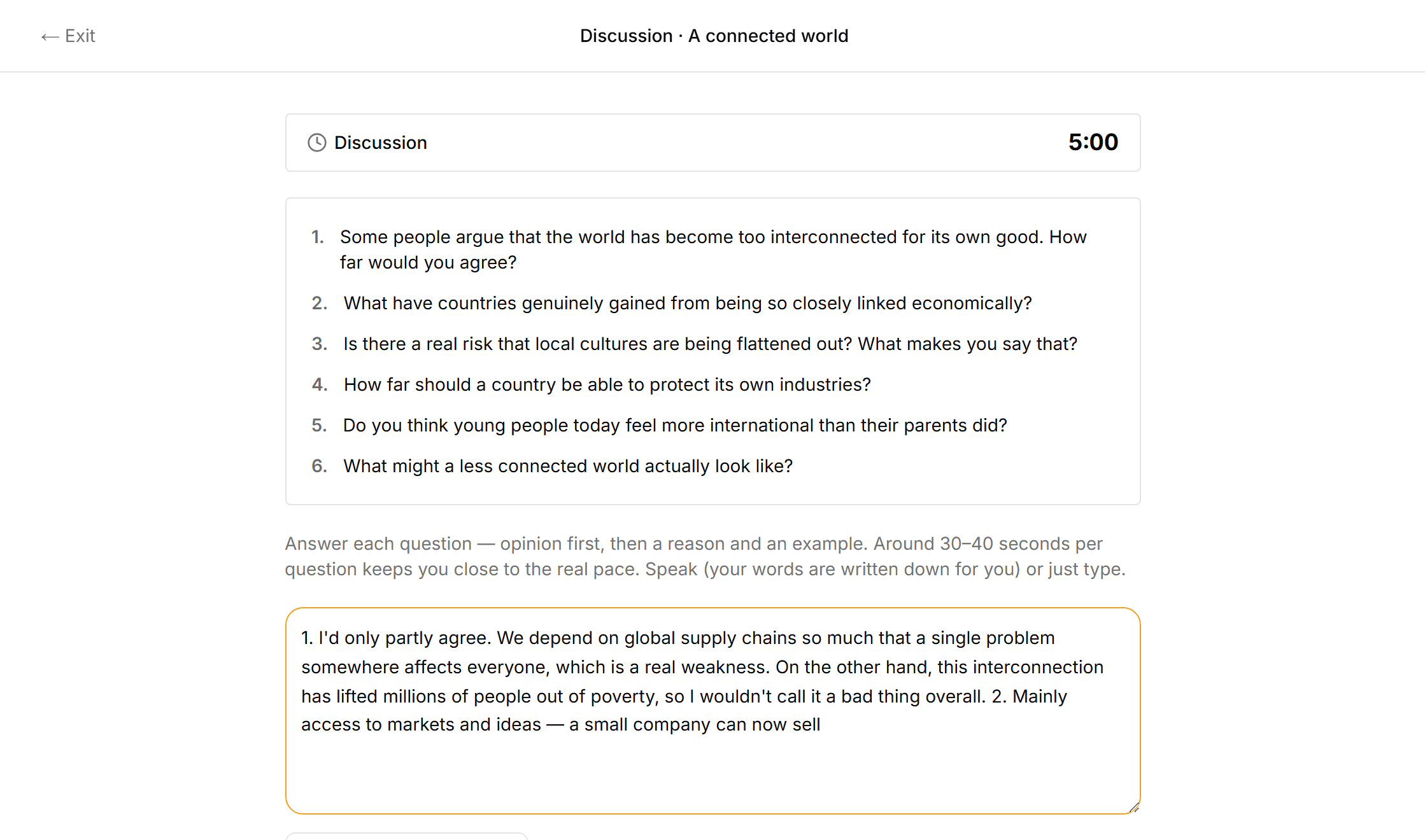 C1 · Speaking, Part 4
Coming from the level below, a school year of steady work is a realistic frame; a term is a sprint. Cambridge’s own guidance puts roughly 500–600 hours of guided learning behind a B2 pass and 700–800 behind C1 — counted from beginner, so what matters for you is the gap between where the first mock says you are and where the pass mark sits.
Whatever the total, spread it thin: forty-five focused minutes a day beats a six-hour Saturday every time, because exam skills are habits and habits are built by frequency, not by heroics. An hour inside the exam’s own format does double duty — it teaches the language and the paper at once.
